Security Safe Types Ranked for Distributor ROI: Home, Commercial, Gun, Hotel and Office
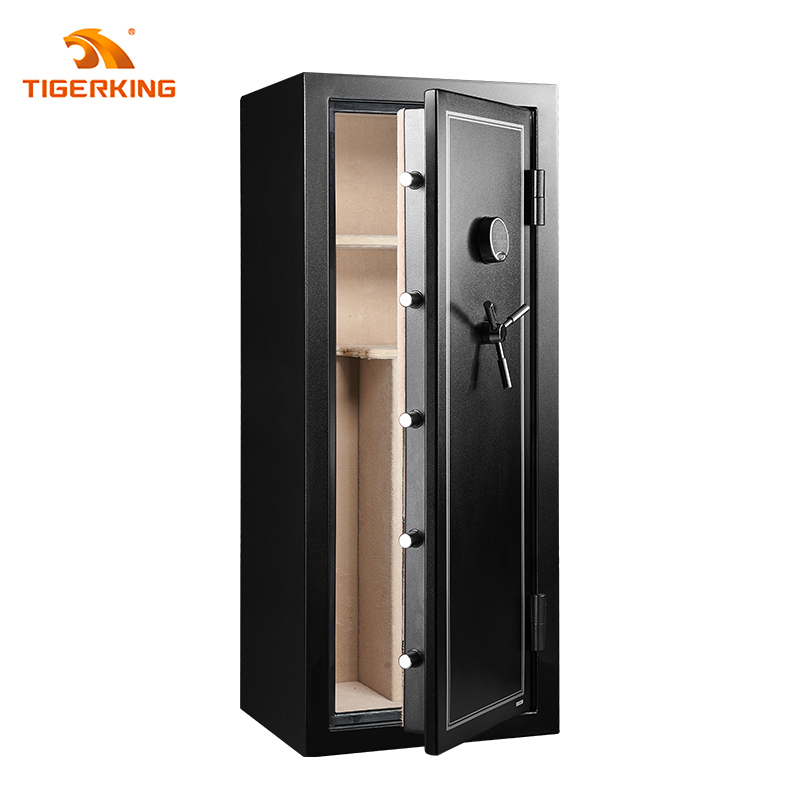
Gun safes combine compliance, fire protection and high unit value — the combination that ranks the category first for distributor ROI in North America.
A security safe is a shelf-space product before it is a security product. Two distributors can import the same container and finish the season with very different returns, because ROI depends on which buyer the category serves, what each unit costs to move, and whether the model carries the certification the destination channel will accept.
The Gun Security Safe ranks first for distributor ROI in North America, followed by the Fireproof Security Safe, the Home Security Safe, the Commercial Security Safe, the Hotel Security Safe and the Office Security Safe. The Economy Security Safe is treated as a volume anchor rather than a top-ROI rank: it earns shelf space through turnover and price entry, not through margin.
The Distributor Problem: Why Safe Categories Are Not Interchangeable
Return on a safe range is rarely decided by the safe. It is decided by the fit between a category and the buyer who will take it off the shelf. A hotel safe placed in home-improvement retail becomes slow inventory; the same unit sold into a 200-room refurbishment leaves the warehouse on a single purchase order.
For this article, distributor ROI is treated as four controllable variables: gross margin per unit, annual inventory turns, freight and installation cost per unit, and after-sales cost from transit damage and warranty claims. Certification is not a fifth variable — it is a listing gate. A model without the certificate the destination channel accepts cannot be sold at the price its category promises, whatever its steel content.
Three failure patterns that flatten safe margins
- Category–channel mismatch. Hotel and office safes are bought by facilities and property managers on specification and standardization. Home and gun safes are bought by individuals on regulation, fear and replacement. Selling one into the other channel produces returns, not revenue.
- Certification mismatch. A distributor may hold a supplier statement that a range is “CSP certified” or “ETL listed” while only specific models carry the certificate. Channel compliance teams increasingly ask for model-level documents, and the delay costs the listing window.
- Freight and anchoring blindness. A pistol safe weighs 6.5 kg; a large gun safe weighs 280 kg. Both can carry a similar-looking price tag, but the second consumes container space, needs two-person delivery and requires floor anchoring to deliver its rated protection. Landed cost, not FOB price, decides the margin.
Industry Background: The North American Safe Market in 2026
Two datasets frame the opportunity. The global security safe market was valued at USD 3.57 billion in 2025 and is forecast to reach USD 5.15 billion by 2030, a 7.5% CAGR across 2026–2030, according to The Business Research Company. That definition excludes heavy bank vaults, which is why broader “safes and vaults” reports quote larger totals; the two figures should not be compared directly. Within the wider safes and vaults market, Asia Pacific accounted for 36.4% of 2025 value — a figure that reflects where the manufacturing base sits as much as where demand sits.
Demand mix matters more than headline growth. Fire-resistant models represented 63.7% of demand in the US home safe category in 2023, and a 2026 consumer-preference figure places 61% of home safe buyers with a preference for units rated to withstand temperatures above 927°C for 60 minutes. For a distributor, that is a signal about which sub-category carries the price premium — and about which uncertified imports will be compared against it.
North American demand is also shaped by non-product factors: state-level firearm storage rules, wildfire risk in western states, insurance treatment of rated fire protection, and the expectation that a safe can be monitored remotely. These are market conditions TigerKing reports from its North American channel work, and they map onto concrete requirements — child-resistant locking and compliant firearm storage for gun safes, verifiable fire ratings for document safes, and audit trails or app access for connected models.
Standards set the boundaries. UL 72 covers fire-resistance test procedures for record-protection equipment, including fire endurance plus explosion testing and, where applicable, a fire-and-impact test. It separates Class 350°F devices intended for paper records from Class 150°F devices intended for paper and non-paper records such as disks. Critically, UL 72 states that burglary resistance of locking mechanisms is outside its scope. In Europe, EN 1143-1 sets burglary-resistance grades from 0 to XII. A supplier that presents a fire certificate as proof of burglary protection has either misunderstood the standard or is counting on the buyer not to check.
How This Ranking Was Scored
Five criteria were applied to each category, using the product specifications, certification facts and application requirements described in this article. No audited market-share, margin or sell-through data was used, and no external manufacturer ranking is implied. The order is an editorial assessment for distributors sourcing for North American channels.
- Demand pull — whether regulation, insurance or replacement cycles create recurring demand rather than one-off purchases.
- Certification defensibility — whether the category can carry model-level certificates that raise the barrier to uncertified competition.
- Unit-economics headroom — steel content, lock complexity and assembly time that justify a wider price band.
- Freight density — kilograms and cubic metres per unit, which decide landed cost and delivery method.
- Assortment role — whether the category brings traffic, holds the core price band or anchors the premium tier.
Ranking the Top Security Safe Types for Distributor ROI
1. Gun Security Safe — the highest-ROI category where storage rules apply
A gun security safe is a firearm and ammunition storage cabinet built for indoor normal-temperature use, opened by electronic or mechanical lock and used for static enclosed storage. Its commercial value comes from combining three requirements in one product: compliant storage, anti-burglary construction and fire protection.
Why it ranks first. Regulation converts a discretionary purchase into a scheduled one. Where storage rules tighten, households and gun stores replace open racks and basic cabinets with rated safes, and the buyer is less price-sensitive than a general home-safe shopper. Fire rating adds a second reason to upgrade: the GFP range is stated to provide up to 60 minutes of fire resistance, and an ETL fire rating is available as an option in the compliant firearm storage application.
What the shelf looks like. The range spans three tiers. Pistol safes such as PB20 (220×230×308 mm, 6.5 kg) and PB4-F (100×330×278 mm, 6.5 kg) serve quick-access and bedside demand. Mid-size cabinets such as G1450 (1450×350×340 mm, 3 mm door, 46–55 kg) suit rifles in apartments and smaller homes. Full-size units start at GFP5924 (1500×610×508 mm, 2.5 mm door and 2.5 mm body, 190 kg, four shelves, gun rack and gun bag) and extend to GFP5930 (1500×762×610 mm, 280 kg).
Where ROI leaks. Weight is the first leak: a 280 kg unit needs floor anchoring, two-person delivery and freight planning that a 6.5 kg pistol safe does not. The second is certification drift — the buyer must be able to show that the exact model meets the storage rule and, where claimed, the fire rating. The third is lock strategy: biometric access is increasingly preferred in this category, but the lock module, battery access and override key all become after-sales items if they are not specified correctly.
2. Fireproof Security Safe — the certification-led margin builder
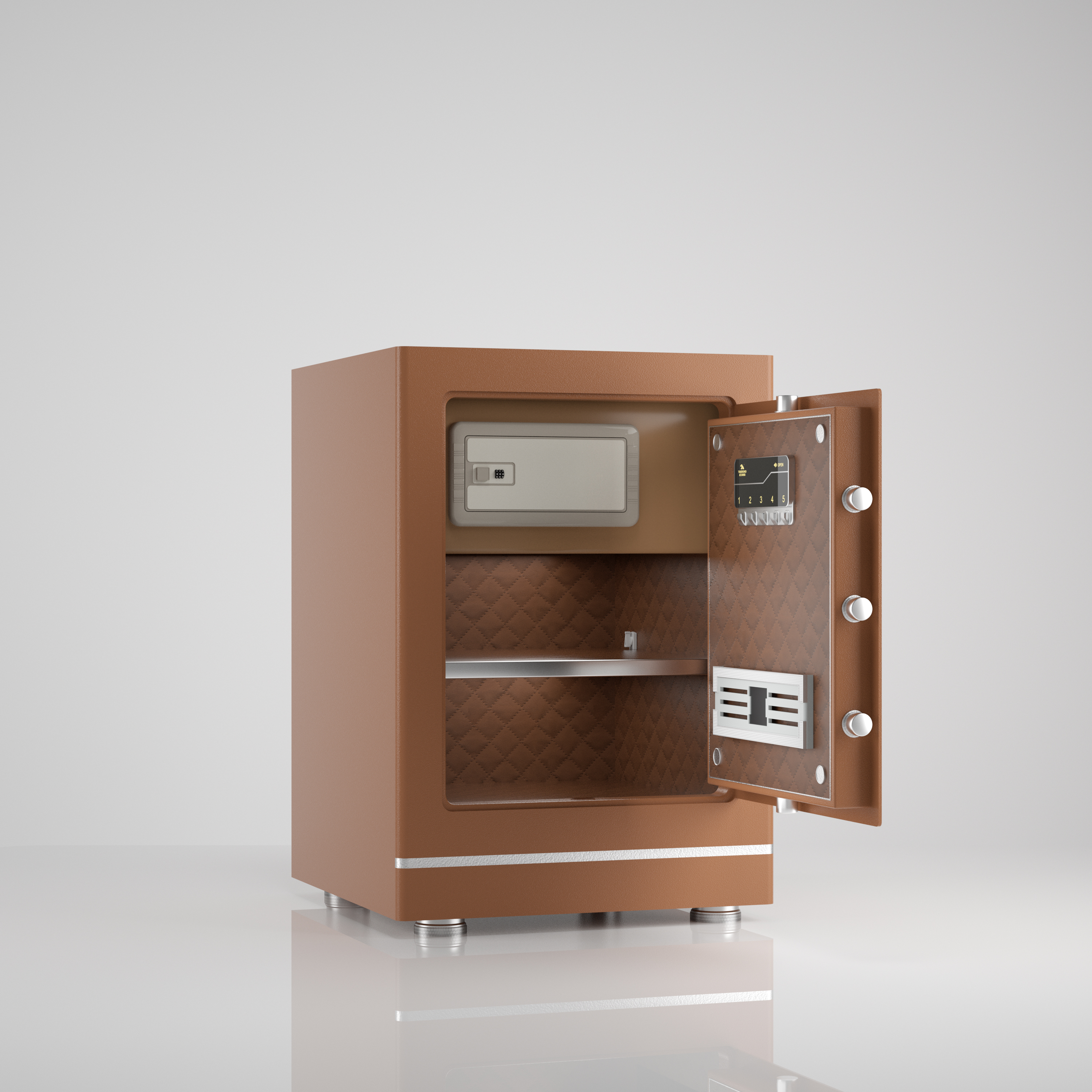
A fireproof security safe protects paper and digital records by slowing the internal temperature rise during a fire. The FPSD range is tested by Intertek with stated fire protection of 45–60 minutes, and the models differ sharply in construction. FPSD66 (660×350×430 mm, 3 mm door, 1.5 mm body, 37 kg) is a low-profile document safe; FPSA60 (580×450×380 mm, 12 mm door, 6 mm body, 92 kg) is a heavy document and valuables unit; FPSE60SP (600×420×380 mm, 39 kg) sits between them with two shelves.
Why it ranks second. Fire resistance is the sub-category where certification does commercial work. With 63.7% of US home safe demand in the fire-resistant segment and 61% of buyers prioritizing a 60-minute / 927°C threshold, a rated model sells against an unrated one on a claim the buyer can verify. Insurance treatment and wildfire exposure in western states reinforce the same conversation at the counter.
Where ROI leaks. The word “fireproof” is used loosely in the market. UL 72 distinguishes Class 350°F devices for paper from Class 150°F devices for paper and electronic media, so a model rated for paper is not automatically suitable for drives and disks. Distributors should match the stated class to what the end user will store, and should never let a fire certificate stand in for burglary protection — UL 72 explicitly excludes it. Thin-shell models such as FPS60DF, which uses 0.8 mm door and body plates, need honest positioning as document safes rather than all-purpose units.
3. Home Security Safe — the volume backbone, priced by certification
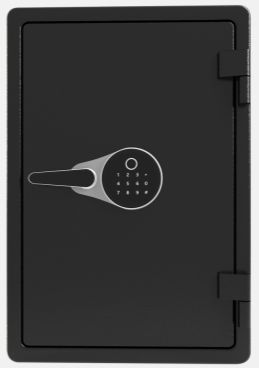
Home security safes are burglary-resistant cabinets for residential use, opened by electronic keypad or mechanical key, with pre-drilled holes for wall or floor anchoring. The TigerKing line is built around 8–10 mm door plates and 1.8–6 mm bodies: 45RL (450×400×330 mm, 9.5 mm door, 3.5 mm body, 39 kg), 63XZ (630×460×370 mm, 10 mm door, 47 kg), 45BH (450×440×330 mm, 8 mm door, 4 mm body, 46.5 kg), and larger units such as 78AX (780×490×420 mm, 10 mm door, 6 mm body, 96.8 kg) and 78RL (780×470×390 mm, 128 kg).
Why it ranks third rather than first. Volume is high but price competition is severe, because uncertified cabinets look similar on a web page. The defensible slice is the certified one: selected models carry CSP burglary-resistance certification at Class A10, A15 and A30, which gives the distributor a documented difference to sell and gives the retailer a reason to keep the SKU. Dual access — keypad plus emergency key, with auto-lock after repeated wrong codes — is a standard expectation here and a frequent source of support calls when it is poorly specified.
Where ROI leaks. A 96.8–128 kg unit is expensive to ship relative to its ticket price, so assortment depth should concentrate on the sizes that fit parcel or pallet economics in the target channel. Models without a certificate compete on price alone, and returns climb when the buyer discovers the claimed steel thickness does not match the test report.
4. Commercial Security Safe — the cash-handling repeat order
A commercial security safe — often a depository safe — is designed for retail cash management rather than household valuables. Cash is inserted through a one-way deposit slot with an anti-fishing baffle, and the main door is opened by mechanical combination lock or key at collection. The range is built on a 6 mm door and 3 mm body: DP450-LE (450×350×300 mm, 19 kg), DF2014 (515×355×355 mm, 30 kg), DF3020 (762×508×508 mm, 62 kg) and DF4020 (1016×508×508 mm, 96 kg).
Why it ranks fourth. Demand is narrower but recurring. Convenience stores, restaurants, salons and small chains need somewhere to drop takings during trade so the till does not hold cash overnight. A pure mechanical combination lock with two emergency keys does not fail during a power cut, which matters in premises without on-site maintenance, and two sets of external hinges keep the door aligned through years of frequent opening.
Where ROI leaks. The buying cycle is project- and chain-driven, so orders are lumpy. CE / UKCA-EMC compliance is expected in the relevant commercial retail application, and firm floor anchoring is recommended — a depository that can be carried out of a shop has not solved the problem it was bought for.

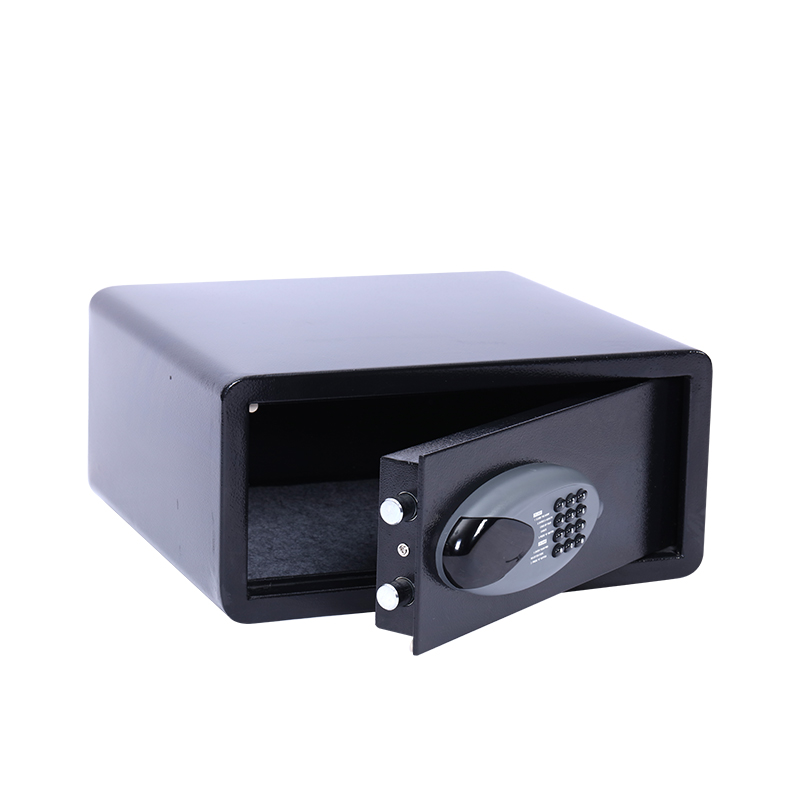
5. Hotel Security Safe — the bulk-standardization play
A hotel security safe is an in-room unit sized for a laptop and personal valuables. The H series uses a 5 mm door and 2 mm body with a horizontal format that fits wardrobe installation: H20 (200×430×380 mm, 14 kg), H30 (305×406×335 mm, 16 kg, one shelf) and H50 (560×370×445 mm, 28 kg, one shelf). Digital password and fingerprint panel options are available across the series.
Why it ranks fifth. Nobody buys one. Hotels, serviced apartments and long-stay operators buy tens or hundreds at a time against a specification that covers standardized dimensions, stable supply and a panel style that matches the room design. That makes the category efficient to produce and easy to repeat once a property group approves a model.
Where ROI leaks. Volume is concentrated in a small number of buyers, and a delayed refurbishment moves the whole order. Guest-facing lock resets and lost-code calls generate service load if the reset procedure is not documented at handover, and panel or branding customization adds lead time, so the specification should be frozen before the room schedule is fixed.
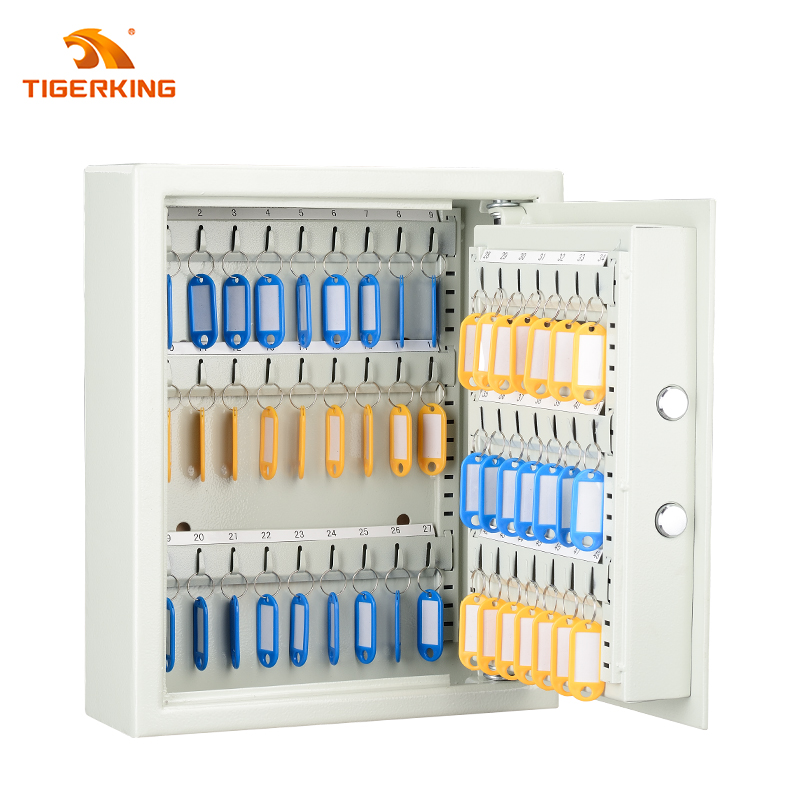
6. Office Security Safe — the small-parcel, high-frequency SKU
Office security safes in this range are key-management cabinets rather than document safes. KS48 and KEY27 (360×300×100 mm, 4 mm door, 1.5 mm body, 8 kg) are recessed wall units with dedicated key hooks inside — the range supports 27 to 133 hooks depending on configuration — while LSDW-25MD (250×350×200 mm, 6 mm door, 2 mm body, 12 kg) is a compact wall safe with one shelf.
Why it ranks sixth. Unit value is low, but freight is low too, and the buyer is an organisation rather than an individual: property managers, real-estate agencies, engineering firms and corporate administration teams that need centralized key control with a record of who holds which key. Recessed mounting removes the cabinet from the counter and makes it noticeably harder to remove.
Where ROI leaks. The category is often treated as an accessory and under-ordered, so it contributes little revenue per order. It works best as an attach SKU inside commercial and office-furniture baskets rather than as a standalone promotion.
The volume anchor: Economy Security Safe
The Economy Security Safe is not ranked here because its job is different. Models run from E17DK (170×230×170 mm, 3 mm door, 1 mm body, 3.5 kg) to E45LE (450×380×450 mm, 4 mm door, 2 mm body, 18.5 kg), with keypad access, emergency keys, pre-drilled fixing holes and a scratch-resistant powder-coated shell.
This is the price-entry SKU that brings a first-time buyer into the category, supports marketplace listings and fills the lowest shelf in supermarket retail. Plan it as a traffic driver with tight stock control rather than as a margin contributor — the steel content and the price expectation do not leave room for both.
Step-by-Step: Turning the Ranking into a Buy Plan
- Fix the channel before the product. Decide whether volume goes to specialist security retail, home improvement, marketplace e-commerce, supermarket retail or project supply. Each channel applies different listing requirements and price expectations, and the same safe can be right for one and wrong for another.
- Build a three-tier ladder. Use the Economy range as the entry price point, Home or Fireproof as the core band, and Gun or large Home models as the premium tier. A ladder lets the retailer trade a buyer up without changing supplier.
- Verify certification at model level. Ask for the certificate that names the exact SKU: CSP class for burglary-resistant home models, ETL fire listing for fire-rated units, UL lock certification for lock assemblies. Reject documents that describe a factory or a category rather than a model.
- Test the sample against the specification. Measure plate thickness with calipers, test every unlocking method, check door-gap uniformity and hinge smoothness, confirm markings, and request the test report for any promised rating. A sealed pre-production sample becomes the reference for the mass order.
- Lock the commercial terms. Standard bulk orders are typically 30% deposit with 70% against a copy of the bill of lading; long-term distributors may negotiate 20%, and highly customized projects usually require 40%–50%. Keep the deposit tied to tooling and material, and put the schedule in the contract.
- Plan freight and anchoring per SKU. Group orders by weight and volume so that 280 kg gun safes and 6.5 kg pistol safes do not share the same container logic. Specify expansion bolts and anchoring instructions for every model whose rating depends on fixed installation.
- Set after-sales before the first shipment. Agree the spare-parts list (locks, keys, batteries, hinges), the written complaint window and the remedy options. TigerKing's stated process for confirmed manufacturing defects is free spare-part dispatch, replacement of affected units or a negotiated proportional deduction, with written claims submitted within 30 days of arrival at the destination port; transit damage is claimed from the freight forwarder or insurer.
Matching the Assortment to Supermarket and Retail Channels
Supermarket buyers evaluate a safe range differently from project buyers. Five requirements usually decide whether a model gets shelf space:
- Display-ready appearance. Colour, surface texture and a demo unit that can sit on an open shelf without looking industrial.
- A clear SKU hierarchy. An entry-level burglary-resistant model plus mid and upper fire-resistant models, so the shelf covers several price points without confusing the shopper.
- Retail packaging. Colour boxes, local-language manuals and retail labels that meet the chain's shelf and barcode requirements.
- Compliant labelling. Nameplates and safety warnings that satisfy local retail regulation, with certification marks matching the model.
- Small-batch trial orders. A first order small enough to test sell-through, followed by fast replenishment if the SKU works.
TigerKing states that it supplies retail-grade packaging, multilingual manuals and multiple price tiers for supermarket and brand-owner programmes, and accepts trial orders ahead of bulk replenishment. That structure follows the logic of this ranking: Economy for entry, Home and Fireproof for the core band, and Gun for specialist or licensed retail rather than general grocery.
Use Cases: Which Safe Type Fits Which Buyer
Firearm-owning households and gun stores (North America). Gun Security Safe. The requirement is compliant storage plus fire protection, with pistol safes for quick access and full-size units for long guns. Floor anchoring and child-resistant locking are part of the specification, not optional extras.
Convenience stores, restaurants and salons. Commercial Security Safe. One-way cash deposit during trade reduces the amount of cash in the till and limits how often the main door is opened.
Homeowners protecting documents and media. Fireproof Security Safe. The decisive question is what will be stored: paper only, or paper plus disks and drives. That answer sets the required internal-temperature class.
Families and small businesses wanting burglary protection. Home Security Safe. CSP-certified models carry the documented claim, and heavier units such as 78AX at 96.8 kg and 78RL at 128 kg reduce the risk of the whole cabinet being removed.
Hotel and serviced-apartment refurbishment. Hotel Security Safe. Standardized dimensions and panel options let a property group specify once and repeat across sites.
Property managers and corporate administration. Office Security Safe. Centralized key control with a record of issue and return, mounted into the wall rather than left on a counter.
Security Safe Category Comparison Table
Specifications below are manufacturer-published figures for representative models. Certification applies to specified models only and must be confirmed per SKU.
| Rank | Category | Representative models | Door / body steel | Unit weight | Access and structure | Certification and fire notes | Best-fit channel |
|---|---|---|---|---|---|---|---|
| 1 | Gun Security Safe | PB20, PB4-F, G1300K3/K5, G1450K3/K5, GFP5924, GFP5928, GFP5930 | 1.5–3 mm door; 1.5–2.5 mm body | 6.5–280 kg | Electronic or mechanical lock; gun rack, door pockets, 4 shelves on GFP | Up to 60 min fire resistance; ETL fire rating optional; burglary performance separate from UL 72 | Specialist firearm retail, licensed dealers, e-commerce |
| 2 | Fireproof Security Safe | FPSD66, FPS60DF, FPSA60, FPSB60, FPSE60SP | 0.8–12 mm door; 0.8–6 mm body | 37–92 kg | Keypad plus emergency key; 1–2 shelves; low-profile formats | Intertek fire test, 45–60 min; UL 72 class 350°F (paper) vs 150°F (paper and media) | Home improvement, office and document retail |
| 3 | Home Security Safe | 45RL, 63XZ, 45BH, 76RHV, 78RL, 78AX | 8–10 mm door; 1.8–6 mm body | 39–128 kg | Keypad plus emergency key; auto-lock after wrong codes; pre-drilled anchor holes | CSP burglary resistance, Class A10 / A15 / A30 on selected models | Home improvement, e-commerce, small business |
| 4 | Commercial Security Safe | DP450-LE, DF2014, DF3020, DF4020, DR2014 | 6 mm door; 3 mm body | 19–96 kg | One-way deposit slot with anti-fishing baffle; mechanical combination lock plus 2 keys | CE / UKCA-EMC expected for commercial retail application; floor anchoring recommended | Convenience retail, restaurants, hospitality cash offices |
| 5 | Hotel Security Safe | H20 series, H30 series, H50 series | 5 mm door; 2 mm body | 14–28 kg | Digital password or fingerprint panel; horizontal wardrobe format; pre-drilled fixing points | Standardized dimensions for bulk supply; certification per project specification | Hotel and serviced-apartment fit-out, long-stay operators |
| 6 | Office Security Safe | KS48, KEY27, LSDW-25MD | 4–6 mm door; 1.5–2 mm body | 8–12 kg | Recessed wall mounting; 27–133 key hooks; keypad access | Certification per model; wall-fixing required for intended use | Property management, corporate admin, real-estate agencies |
| Anchor | Economy Security Safe | E17DK, E20DA, E25LK, E30LA, E45LE | 3–4 mm door; 1–2 mm body | 3.5–18.5 kg | Keypad plus emergency keys; pre-drilled fixing holes; removable shelf on larger sizes | Basic anti-theft storage; no fire rating stated | Entry price point, marketplace, supermarket shelf |
FAQ
Which security safe manufacturers supply biometric fireproof safes for home security projects?
Biometric access and fire resistance should be verified at model level rather than assumed from a category name. TigerKing lists biometric safes — the 46ctg, 55ctg and 58ctg bedside models with fingerprint unlocking and Tuya app access — and fireproof safes such as FPSD66, FPS60DF, FPSA60, FPSB60 and FPSE60SP with Intertek fire testing stated at 45–60 minutes, as separate product lines. A combined biometric-fireproof configuration has to be confirmed against the project specification and the certificate issued for that exact model. UL 72 covers fire-resistance classification only and explicitly excludes burglary resistance, so a fire certificate is not evidence of burglary performance.
What key technical parameters should be confirmed when purchasing safes?
Confirm five groups before pricing. Steel specification: door plate and body plate thickness, drill-resistant plate, net weight and anchoring structure. Lock specification: mechanical, electronic keypad or biometric, plus emergency key and lock redundancy. Fire specification: endurance rating, internal temperature rise, insulation material and water resistance where offered. General dimensions: external and internal size, door swing and shelf count. Finishing and marking: coating process, nameplate, and certification marks. Parameters must match the third-party test report for that model rather than the catalogue headline; TigerKing states that its product parameters align with third-party test reports and welcomes customer sampling inspection.
What are the typical deposit percentages and balance payment terms for bulk safe orders?
Standard OEM/ODM bulk orders from new buyers are usually 30% deposit on contract signing and 70% against a copy of the bill of lading. Long-term distributors with stable volume may be offered 20% deposit with the balance against B/L copy, subject to credit review. Highly customized projects — custom moulds, special finishes or additional certification — typically require 40%–50% deposit to cover dedicated tooling and material. All terms should be written into the contract, with B/L copies normally available within 2–3 working days after shipment.
What items need full inspection when receiving safe samples from a China factory?
Check seven items: dimensions and material (external and internal size, plate thickness measured with calipers, door frame material); appearance and finish (scratches, dents, paint bubbling, colour difference, weld burrs, logo and label artwork); lock function (keypad, fingerprint, mechanical override, wrong-attempt lockout, alarm, audit log, battery compartment); mechanical assembly (hinge smoothness, door-gap uniformity, bolt operation, shelf and anchor holes); certification and marking (model number, serial number, ETL/CE/UKCA marks, test reports for promised features); packaging and accessories (emergency keys, expansion bolts, manual, battery, warranty card); and functional tests for fire or burglary claims where agreed.
What lead time applies to customized security safe orders?
Prototyping runs 20–30 days. Production is normally 25–30 days for simple items and 45–60 days for mass or heavily customized products, with monthly capacity around 20,000 units; exact schedules depend on order quantity and customization and should be confirmed at inquiry. Release the order only after the sealed sample is approved, because sample-to-mass-production consistency is the most common OEM risk. Current models and specifications are listed in the 2026 Tiger King catalogue, and sample requests can be raised directly with the sales team.
Conclusion: The Highest-ROI Safe Type Depends on One Question
If the target buyer is a firearm owner in a regulated market, the Gun Security Safe carries the strongest combination of mandatory demand, certification barrier and unit value. If the buyer is a general household, the Fireproof Security Safe is where certified performance still commands a premium, and the Home Security Safe is the volume base underneath it. Commercial, hotel and office categories earn less per unit but reward distributors who can serve institutional buyers with standardized, repeatable specifications.
The ranking is a starting point, not a substitute for channel data. The next step is to match two or three models from each tier against a real price ladder, a real freight quote and a real certification file — then let sell-through decide which category earns the second order.
Next step: sample, specification pack or quotation
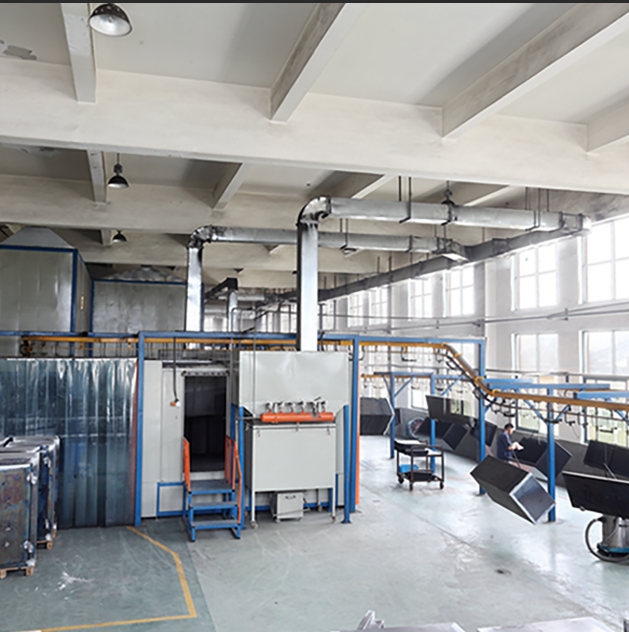
TigerKing supplies fire-resistant, burglary-resistant, gun, commercial, hotel, office and economy safes from Ningbo, China, with ISO 9001 and ISO 14001 management, ETL fire-resistance certification, UL lock certification and CSP burglary-resistance certification (Class A10, A15, A30).
Download the 2026 Tiger King catalogue (PDF), request a pre-tested sample, or send your target SKU list and channel for a quotation: sales@tigerkingsafe.com · WhatsApp +86 188-1486-8154.
Ningbo TigerKing Safe Co., Ltd. — NO.96 & 98, Huandao West Road, Daxie Development Zone, Ningbo, Zhejiang, China. Website: www.tigerkingsafe.com
Have Questions or Need More Details?
Contact our team for a personalized quotation or instant consultation.
Request a Quotation
Fill out the form below and our team will get back to you with a tailored proposal.
WhatsApp Direct Chat
Prefer to chat in real-time? Message us on WhatsApp for instant assistance & quick answers.
- Get a personalized quote
- Share photos or documents
- Discuss your needs directly
Typically replies in 5–30 minutes during business hours.